An agency's worth of production sites, one maintainable system
The Client-Site Engine
A fleet of live client sites for local businesses on a custom Eleventy/CodeStitch stack — performance-first, SEO-driven, and maintained by one engineer — now being turned into an AI-assisted site-matching engine.
- Context
- Founder / Operator
- Timeframe
- Ongoing
- Eleventy
- Astro
- Next.js
- CodeStitch
- HTML/CSS
- JavaScript
- Local SEO / JSON-LD
- GoHighLevel
The setting
Through my agency, All For One, I build and maintain websites for local businesses — HVAC companies, law offices, restaurants, salons, pest control, an equine vet. These businesses usually arrive trapped in slow WordPress builds: plugin sprawl, security patches, hosting bills, and a site that scores 40 on mobile.
My answer is deliberately old-fashioned and deliberately fast: custom-coded static sites on an Eleventy/CodeStitch stack (Astro and Next.js where the project calls for them). No CMS attack surface, nothing to patch at 2 a.m., hosting that costs almost nothing, and Lighthouse scores that make Google’s local rankings take notice. For a plumber, page speed isn’t vanity — it’s whether the phone rings.
The real engineering problem: scale of maintenance
Anyone can build one fast static site. The engineering problem is that there’s now a whole fleet of them, and one person maintains it. That forces the same disciplines as any production platform:
- Convention over configuration — every repo shares structure, so context-switching between client sites costs minutes, not hours.
- A component recipe system — CodeStitch blocks plus my own library mean new sites assemble from proven parts instead of starting from zero.
- Boring, repeatable deployment — static output, predictable hosting, no snowflake servers.
Most of these sites also plug into a GoHighLevel layer I run as a reseller: review funnels, missed-call text-back, CRM pipelines. The site is the front door; the automation is what makes it pay for itself.
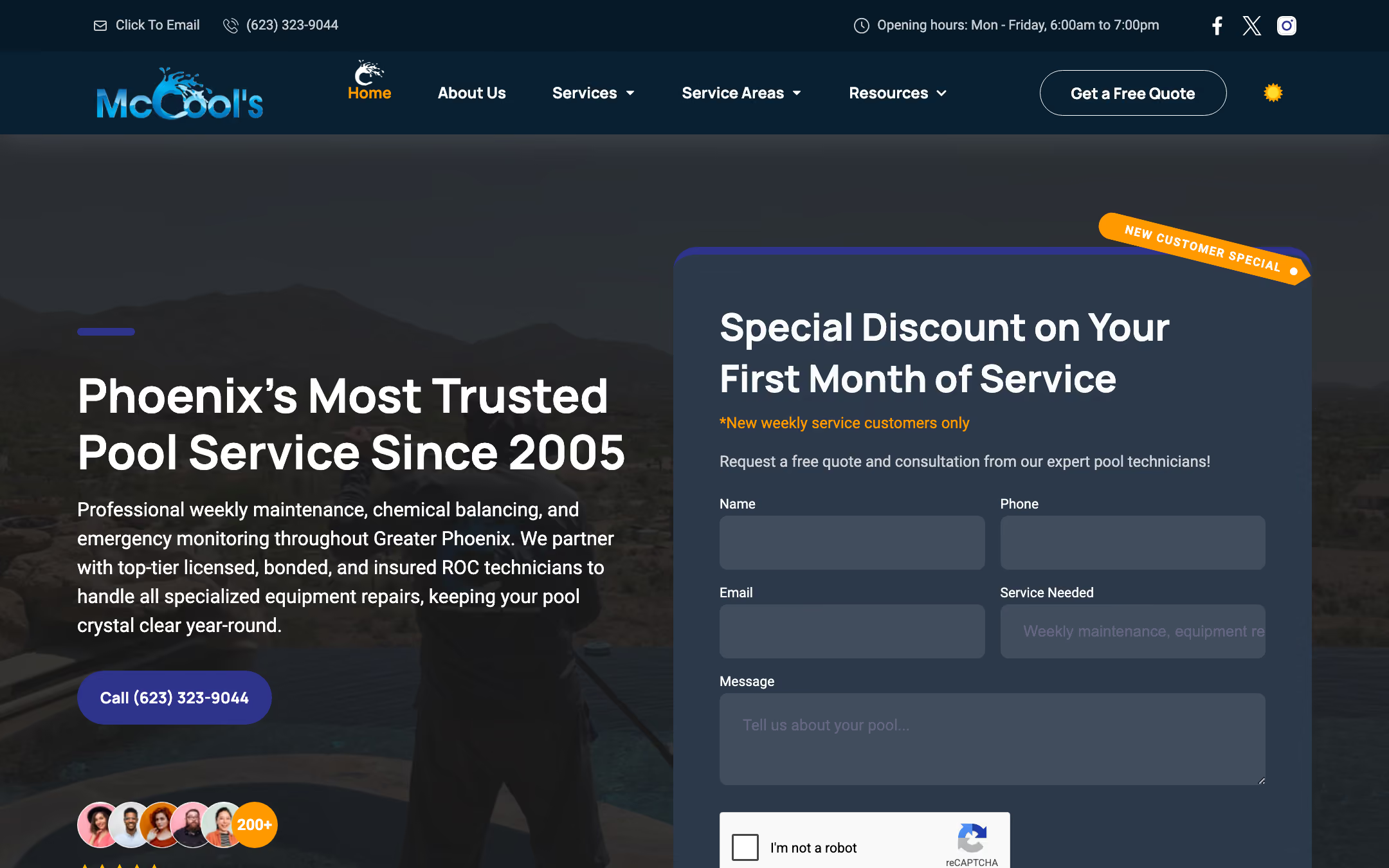
A few from the fleet:


The next phase: the catalog becomes an engine
The current build: an AI site-matching system that treats the whole repo library as a recipe database. An agent reads the repos and generates structured metadata; a matcher takes a new client brief and selects the two or three best-fit existing sites to reskin. Years of shipped work becomes a searchable asset instead of a pile of folders. I think of it as automating my own leverage — the most honest test of whether you believe in your own tooling.
Why this project matters to an employer
This is what “maintainable” means when it’s not a code-review buzzword: an architecture that lets one engineer keep a whole fleet of production properties healthy while still shipping new ones. It’s also proof of a habit employers care about — I don’t just deliver projects, I build the system that delivers projects.